QU'EST-CE QUE TU CHERCHES?

Choisir flacons-pompes à lotion L'emballage joue un rôle essentiel dans la performance de votre produit et la perception de votre marque par les clients. Il est primordial de penser dès le départ à la compatibilité du produit, à l'expérience utilisateur et à l'esthétique de la marque. Un emballage adapté allie les aspects pratiques, comme le dosage par pompe et la contenance du flacon, à l'attrait visuel. Le design de l'emballage influence les décisions d'achat de produits de beauté, comme le montre le tableau ci-dessous :
Description des preuves | Pourcentage |
|---|---|
Le design de l'emballage influence l'achat | 72% |
Les matériaux d'emballage influencent les choix d'achat | 67% |
Le design de l'emballage est essentiel dans le choix des produits de soins personnels | 66% |
Les consommateurs sont plus enclins à racheter des produits de luxe dotés d'un emballage haut de gamme. | 61% |
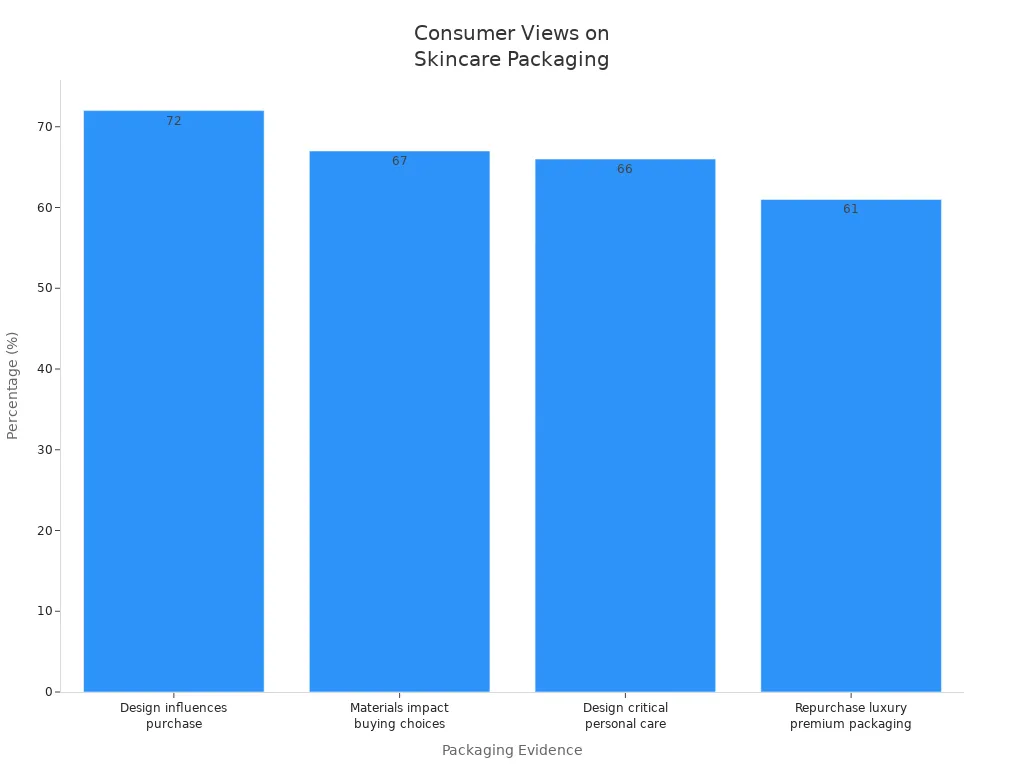
L'emballage est le dernier point de contact avant l'achat ; le design de la pompe et du flacon doit donc être percutant. Un emballage cohérent contribue à la notoriété de votre marque et fidélise votre clientèle. Opter pour un emballage durable renforce également la confiance des consommateurs soucieux de l'environnement.
Choisissez des flacons-pompes adaptés à la viscosité de votre produit pour une application optimale. Tester le flacon avec la formule choisie permet d'éviter les problèmes de distribution lente ou de fuites.
Choisissez le dosage adapté à votre pompe pour garantir que vos clients utilisent la quantité correcte. Cela réduit le gaspillage et améliore la satisfaction des utilisateurs.
Tenez compte de la taille du flacon en fonction de la fréquence d'utilisation du produit par vos clients. Les petits flacons sont parfaits pour les voyages, tandis que les plus grands conviennent mieux à un usage domestique.
Accordez une attention particulière au design et aux couleurs de l'emballage. Ces éléments influencent la perception du consommateur et peuvent renforcer l'identité de votre marque.
Privilégiez les matériaux et les designs durables. Les emballages écologiques séduisent les consommateurs soucieux de l'environnement et peuvent valoriser vos produits.
Pour une application fluide et une expérience utilisateur optimale, il est essentiel d'adapter la viscosité de votre produit à celle de la pompe à lotion. La viscosité décrit la consistance de votre formule. Par exemple, une lotion tonique liquide s'écoule rapidement, tandis qu'une crème riche s'écoule lentement et forme un petit tas. Vous pouvez vérifier la viscosité en versant votre produit dans un bécher. S'il s'étale en une ou deux secondes et forme un petit tas, vous aurez besoin d'une pompe à lotion à forte aspiration et dotée d'un ressort adapté aux formules plus épaisses.
Choisir la mauvaise pompe peut engendrer de nombreux problèmes : distribution lente, débit irrégulier, voire panne. Des fuites d'air ou des joints endommagés peuvent provoquer des fuites et du gaspillage de produit. Si le tube plongeur est trop court, il n'atteindra pas toute la formule, surtout pour les lotions épaisses. Testez toujours votre emballage avec la formule finale avant la production en série. Cette étape vous évite des erreurs coûteuses et garantit le bon fonctionnement de vos flacons-pompes.
Voici un tableau des problèmes de compatibilité courants auxquels vous devez faire attention :
Problème de compatibilité | Description |
|---|---|
inadéquation de la viscosité du produit | Peut entraîner une distribution lente, un débit irrégulier ou une panne de la pompe. |
fuite d'air | Peut entraîner une panne de la pompe ou une distribution incorrecte. |
Problèmes de piston interne | Peut entraver le bon fonctionnement de la pompe. |
Mauvaise étanchéité entre la pompe et le flacon | Entraîne des fuites de produit ou une distribution inefficace. |
Taille de cou incorrecte | Peut empêcher la bonne fixation de la pompe à la bouteille. |
Joints endommagés | Peut entraîner des fuites d'air et un gaspillage de produit. |
Pompes non verrouillées pendant le transport | Peut endommager le mécanisme de la pompe. |
Longueur du tube plongeur | Si elle est trop courte, elle risque de ne pas atteindre le produit, surtout si celui-ci est épais. |
Forme de bouteille | Une forme inadaptée peut affecter la capacité à distribuer la totalité du produit. |
Test avec la formule réelle | Il est recommandé de vérifier la compatibilité avant la production en série. |
Il est également important de choisir le type de pompe adapté à votre formule. Les lotions plus épaisses nécessitent des pompes haute viscosité dotées d'orifices plus larges et d'une aspiration plus puissante. Les produits plus légers, comme les sérums ou les lotions toniques, conviennent parfaitement aux pompes standard ou aux vaporisateurs à brume fine. L'adéquation entre la viscosité de votre produit et la technologie de distribution est essentielle pour une application efficace et la satisfaction de vos clients.
Conseil: Ne testez jamais votre pompe avec de l'eau si votre produit est plus épais. Utilisez toujours la formule réelle pour confirmer la compatibilité.
Choisir le bon dosage pour votre pompe à lotion est tout aussi important que de choisir la bonne viscosité. Le dosage correspond à la quantité de produit distribuée à chaque pression. Vous devez délivrer la quantité exacte pour chaque utilisation, afin que vos clients obtiennent les meilleurs résultats sans gaspillage.
Les normes industrielles vous aident à déterminer la dose optimale de produit pour différents types de soins personnels. Pour les produits à faible viscosité comme les lotions toniques ou les sérums, une pompe délivre généralement de 0,5 ml à 1 ml par pression. Pour les produits à forte viscosité comme les crèmes ou les gels, la dose recommandée est de 1 ml à 2 ml par pression. Le tableau ci-dessous illustre ce principe :
Type de produit | Dosage recommandé par pompe | Exemple de taille de bouteille | Nombre de doses |
|---|---|---|---|
Faible viscosité (toniques, sérums) | 0,5 ml à 1,0 ml | 100 ml | 200 doses |
Haute viscosité (crèmes, gels) | 1,0 ml à 2,0 ml | 500 ml | 250 doses |
Il est également important de tenir compte de la quantité recommandée pour chaque application. Pour une crème pour les mains, une noisette suffit généralement. Pour un lait corporel, une quantité équivalente à une pièce de 25 centimes est idéale, surtout pour les zones sèches. Un excès ou une quantité insuffisante risque d'insatisfaction ou de gaspillage.
Voici quelques erreurs courantes commises par les marques lors du choix des flacons-pompes pour leurs nouveaux lancements :
Choisir un tire-lait uniquement en fonction du tour de cou, sans tenir compte de la compatibilité avec le lait infantile.
Une augmentation du débit résout toujours les problèmes de distribution.
Tester les pompes avec de l'eau au lieu du produit lui-même.
En négligeant la longueur du tube plongeur et la forme du flacon.
Omettre la confirmation de l'échantillon avec les formules épaisses.
Les pompes à lotion sont conçues pour des formules dont la concentration en centipoises (cP) se situe entre 1 000 et 10 000. Un système inadapté peut entraîner un gaspillage de produit de 20 à 30 %. Les pompes sans air préservent plus de 95 % de la stabilité des ingrédients pendant 12 à 18 mois, contre 70 à 80 % pour les pompes standard.
Note: Testez toujours votre pompe et votre emballage avec votre produit réel afin de confirmer le bon dosage et une distribution fluide.
En tenant compte avec soin de la viscosité, du type de pompe et du dosage, vous vous assurez que vos flacons de lotion à pompe offrent la meilleure expérience possible à vos clients et protégez la réputation de votre marque.
Choisir le bon format de flacon pour votre produit a un impact sur la satisfaction des utilisateurs et sur l'image de votre marque. La contenance de vos flacons-pompes doit correspondre à la fréquence d'utilisation prévue. Pour les produits de soin quotidiens, les formats les plus courants vont de 120 ml à 200 ml. Ces formats conviennent à différentes utilisations et routines, comme indiqué ci-dessous :
Capacité | Meilleures applications |
|---|---|
120 ml | Lotions pour les mains et le corps de tous les jours |
150 ml | Formules hydratantes et médicamenteuses |
200 ml | Des produits pour le visage conçus pour une utilisation régulière à domicile |
Il est important de tenir compte de l'utilisation que vos clients font de votre produit. Les petits flacons sont pratiques pour les voyages ou les routines quotidiennes. Les grands flacons sont plus adaptés à une utilisation à domicile et à des applications fréquentes. En choisissant le bon format, vous aidez vos clients à utiliser la juste dose de produit et à éviter le gaspillage.
« Je suis constamment en déplacement, donc je préfère avoir des petites bouteilles que je peux glisser dans mon sac, c'est ce que je préfère. Les grandes bouteilles, elles, sont plus faites pour la maison, non ? »
(Femme, ménage 30 ; famille monoparentale avec deux enfants)
Pour une expérience utilisateur optimale, il est essentiel d'équilibrer la quantité de produit et le poids de l'emballage. Les flacons légers facilitent le transport du produit, notamment en voyage. Les flacons plus lourds, comme ceux en verre, peuvent se casser et alourdir inutilement le colis. La réglementation en matière de voyages limite souvent la contenance des flacons à 100 ml ; il est donc primordial d'opter pour des emballages légers pour les formats voyage.
Les bouteilles en plastique léger sont plus faciles à transporter, ce qui les rend idéales pour les voyages.
Les bouteilles en verre plus lourdes sont plus difficiles à transporter et peuvent se casser facilement, ce qui est un problème pour les voyageurs.
La réglementation en matière de voyages limite la taille des bouteilles à 100 ml, ce qui souligne la nécessité de disposer d'options légères.
Les bouteilles en plastique sont résistantes et supportent les chutes, tandis que les bouteilles en verre nécessitent une manipulation soigneuse.
Il est également important de réfléchir au fonctionnement de la pompe avec différents formats de flacons. Une pompe qui délivre une quantité de produit insuffisante ou excessive peut frustrer vos clients. Un choix judicieux de la pompe et du format du flacon garantit un dosage précis et une expérience utilisateur optimale. En concevant vos emballages, vous contribuez à démarquer votre marque et à répondre aux besoins de votre public cible.
« Ils (les enfants) buvaient, puis ils en commençaient un autre, et puis c'était tout, les bouteilles avaient disparu. »
(Femme, ménage 5 ; famille biparentale avec deux enfants)
« J'ai remarqué qu'ils (les enfants) buvaient un peu moins parce qu'il y avait plus de bouteilles au lieu d'avoir une grande bouteille et de finir un verre avant d'en verser un autre… ils la laissaient traîner ou c'est plus pratique d'en prendre une autre s'ils ne la trouvent pas… ils la laissaient traîner parce qu'ils se disaient « euh non, je vais en chercher une autre ». »
(Femme, ménage 4 ; famille biparentale avec trois enfants)
En tenant compte de la taille du flacon, de son poids et de sa compatibilité avec la pompe, vous créez un emballage qui favorise à la fois la performance du produit et la satisfaction du client.
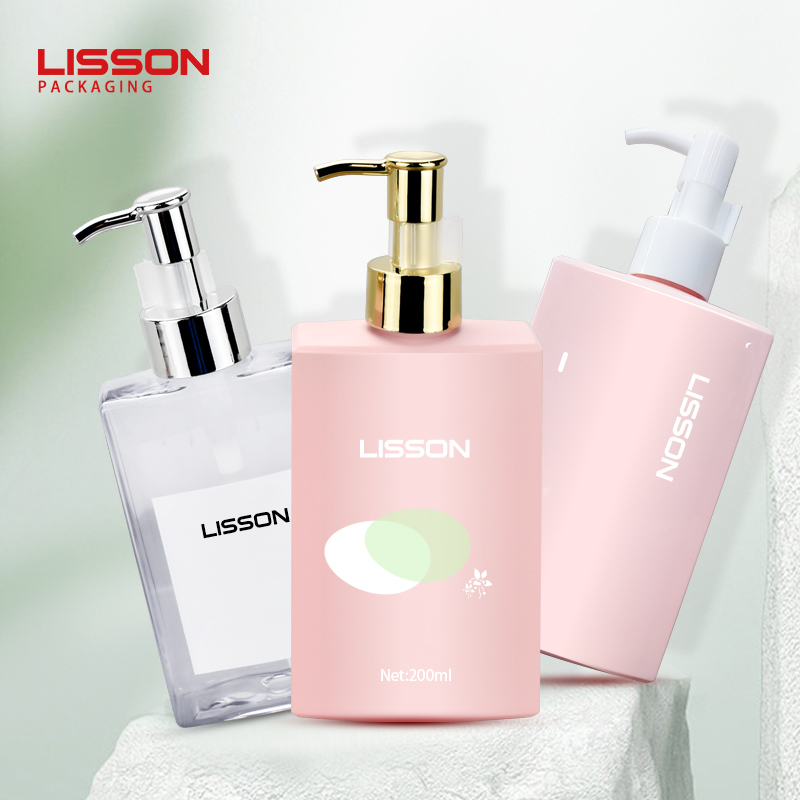
Il est essentiel de comprendre l'impact des différents types de pompes sur la performance de votre produit et la satisfaction client. Les flacons de lotion classiques utilisent une pompe à vis ou une pompe à verrouillage. Ces pompes fonctionnent grâce à un ressort et un actionneur qui aspirent le produit dans le tube. On retrouve fréquemment ce type de pompe dans les emballages de lotions et crèmes épaisses pour les soins personnels. Cependant, les pompes classiques exposent le produit à l'air, ce qui peut entraîner du gaspillage et une contamination.
flacons de lotion à pompe sans air Utilisez un système sous vide. Ce type d'actionneur empêche l'air de pénétrer dans l'emballage. Vous obtenez un dosage précis et régulier à chaque actionnement de la pompe. Les pompes sans air optimisent la durée de vie du produit et préservent la propreté de l'emballage. Elles réduisent également les risques de prolifération bactérienne et d'oxydation. Voici quelques avantages des pompes à lotion sans air :
Les pompes sans air empêchent l'exposition à l'air, réduisant ainsi la contamination et prolongeant la durée de conservation.
Vous distribuez des quantités précises, minimisant ainsi le gaspillage et assurant une application uniforme.
Le système de vide préserve la fraîcheur de votre produit et garantit une utilisation hygiénique.
L'emballage sans air permet de doser précisément le produit, réduisant ainsi le gaspillage.
Les pompes classiques peuvent entraîner un gaspillage de produit dû au contact avec l'air. Il peut en résulter un dosage irrégulier et une utilisation moins hygiénique. Les pompes sans air offrent de meilleures solutions de dosage pour les produits nécessitant une précision accrue et une durée de conservation prolongée.
Vous devez choisir le bon actionneur et la pompe adaptée à la formulation de votre produit. Les pompes à pulvérisation conviennent parfaitement aux produits de soin légers, comme les lotions toniques ou les brumes. Les pompes à mousse utilisent un actionneur spécial pour créer une texture mousseuse, idéale pour les nettoyants doux et les lotions légères. Chaque type de pompe offre une solution de distribution unique pour répondre à différents besoins en matière de soins personnels.
Le tableau ci-dessous compare les avantages et les inconvénients des pompes à lotion et des pompes à mousse :
Type de pompe | Avantages | Inconvénients |
|---|---|---|
Pompes à lotion | Dosage précis et sans débordement pour les produits épais. Idéal pour les grandes quantités. | Ne convient pas aux formulations légères. |
Pompes à mousse | Réduit la consommation de produit par application, favorisant ainsi le développement durable. Idéal pour les produits légers. | Peut ne pas distribuer efficacement les produits plus épais. |
Les pompes à pulvérisation diffusent une fine brume pour une application uniforme. Les pompes à mousse permettent d'utiliser moins de produit par application, favorisant ainsi le développement durable. Il est essentiel d'adapter le type de pompe à la viscosité de votre produit et au mode de distribution souhaité. Des pompes de distribution adaptées améliorent la satisfaction des utilisateurs et contribuent à la mise en œuvre des objectifs de votre marque en matière d'emballage.
Vous pouvez également opter pour une pompe à verrouillage par clip, une pompe à verrouillage automatique ou un mécanisme de pompe interchangeable pour une sécurité accrue. Ces types d'actionneurs préviennent les fuites et protègent votre emballage pendant le transport. Testez toujours votre pompe et la longueur de votre tube avec votre produit afin de garantir un dosage optimal et une expérience client positive.
Il est essentiel de prêter une attention particulière au diamètre du goulot lors du choix de vos flacons-pompes. Ce diamètre, qui correspond à l'ouverture du flacon, détermine la bonne fixation de la pompe et l'étanchéité du flacon. Un goulot inadapté peut entraîner des fuites, du gaspillage de produit et nuire à l'expérience client. Une bonne fixation empêche également l'air de pénétrer dans l'emballage, préservant ainsi la formule et le bon fonctionnement de la pompe.
L'étanchéité d'un emballage dépend de la taille du goulot et du type de fermeture. Il est impératif de vérifier les spécifications avant de finaliser votre emballage. Voici les points clés à retenir :
Le diamètre du goulot d'une bouteille indique le diamètre de son ouverture, ce qui est essentiel pour la compatibilité avec les pompes.
Les spécifications de fermeture, telles que 410 ou 400, définissent le style et la hauteur de la fermeture, ce qui a un impact sur l'ajustement et l'étanchéité de la pompe.
Une inadéquation au niveau de la taille du col ou du type de fermeture peut entraîner une étanchéité incorrecte, rendant la pompe inefficace.
Vous pouvez éviter les problèmes courants en testant la pompe avec votre produit. Cette étape garantit le bon fonctionnement de l'emballage et assure son étanchéité.
Vous devez choisir entre des bouchons standard et des bouchons sur mesure pour vos flacons-pompes de lotion. Les bouchons standard sont conformes aux normes industrielles, telles que 410 ou 400, ce qui les rend compatibles avec la plupart des pompes et des flacons. Les bouchons sur mesure vous permettent de créer un emballage unique, en accord avec votre identité de marque, mais vous devez vous assurer qu'ils garantissent une fermeture sécurisée et une étanchéité parfaite.
Les exigences réglementaires des principaux marchés influent également sur le choix du type de fermeture. Vous devez sélectionner des matériaux et des fermetures conformes aux normes de sécurité, d'étiquetage et environnementales. Le tableau ci-dessous illustre l'impact des réglementations aux États-Unis et dans l'Union européenne sur les décisions relatives à l'emballage :
Aspect réglementaire | États-Unis (MoCRA) | Union européenne (Règlement sur les déchets d'emballages) |
|---|---|---|
Évaluations de sécurité | Il faut prouver que les matériaux d'emballage sont sans danger pour les cosmétiques. | Des évaluations de sécurité similaires sont requises pour les matériaux. |
Exigences d'étiquetage | Étiquetage clair des ingrédients et de l'identité du produit. | Étiquetage obligatoire des ingrédients et de leur utilisation. |
normes environnementales | Encourage le recyclage des matériaux et une gestion responsable des déchets. | Nécessite un emballage durable et une gestion des déchets adaptée. |
Il est conseillé de collaborer avec des fournisseurs d'emballages qui comprennent ces exigences. Ils pourront vous aider à choisir la pompe, le type de bouchon et le flacon les mieux adaptés à votre produit. En privilégiant la compatibilité et la conformité réglementaire, vous protégez votre produit et renforcez la confiance de vos clients.
Conseil: Avant toute production en série, vérifiez toujours les spécifications de fermeture auprès de votre fournisseur. Cette étape vous permet d'éviter les fuites et garantit que votre emballage respecte les normes du secteur.
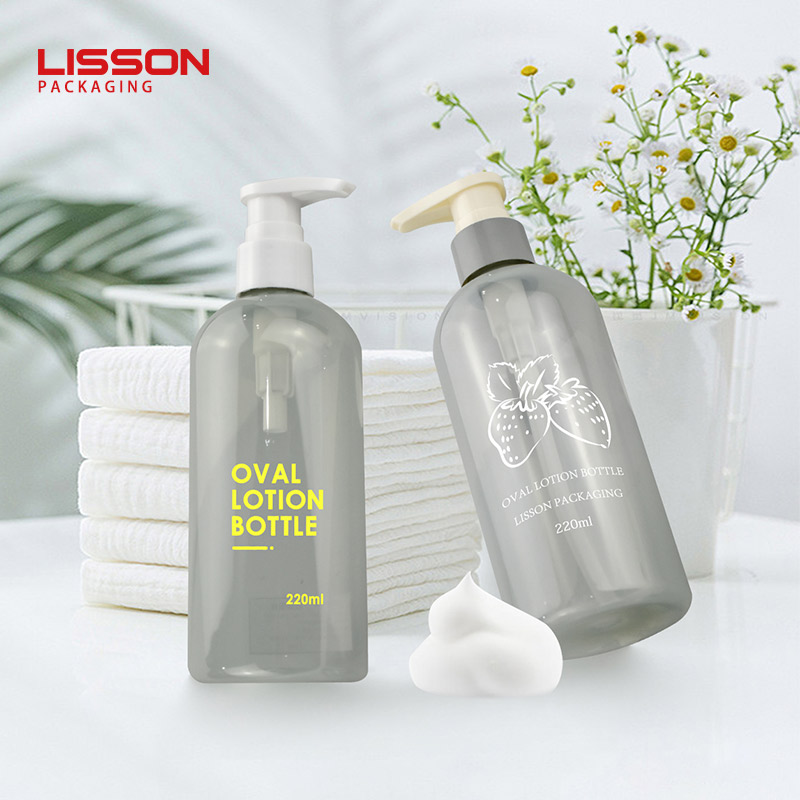
Vous devez choisir des éléments de design qui reflètent les valeurs de votre marque et qui trouvent un écho auprès de votre public cible. Une combinaison judicieuse de couleurs, de finitions et de structure peut transformer un flacon-pompe de lotion en un puissant outil de branding. Commencez par réfléchir aux matériaux, à la conception et aux éléments visuels qui représentent le mieux votre produit et le positionnement de votre marque. Par exemple, les flacons en verre évoquent le luxe, tandis que le plastique PET suggère la praticité et le développement durable. Le type de pompe – classique, compte-gouttes ou à clapet – influence également l'expérience utilisateur et renforce l'image de votre marque.
Voici un tableau qui montre comment différents éléments de design influencent l'identité de marque :
Élément de conception | Description | Impact sur l'identité de marque |
|---|---|---|
Matériels | Le choix de matériaux comme le verre ou le PET peut exprimer le luxe ou la fonctionnalité. | Reflète les valeurs de la marque telles que la durabilité ou le luxe. |
Conception structurale | Des options comme la pompe, le compte-gouttes ou le bouchon à clapet influencent l'expérience utilisateur. | En phase avec le style de vie des clients et le ton de la marque. |
Éléments visuels | La couleur, la typographie et les graphismes créent un récit visuel. | Communique le positionnement de la marque et les valeurs perçues par les consommateurs. |
Il est également important de tenir compte des tendances actuelles. Les consommateurs de la génération Z et les Millennials recherchent des emballages audacieux, créatifs et durables. Ils souhaitent une pompe à lotion unique, en accord avec leurs valeurs. Des textures originales, des couleurs inattendues et des matériaux écologiques peuvent aider votre produit à se démarquer et à créer un lien émotionnel.
Dans un marché saturé, le design de votre emballage doit capter l'attention. La couleur joue un rôle majeur dans la perception de votre produit par les consommateurs et influence leurs décisions d'achat. Des études montrent que la couleur influence entre 62 et 90 % des évaluations des consommateurs. Une couleur bien choisie peut susciter des émotions et valoriser un produit. Pour les soins de luxe, les accents dorés et métalliques évoquent le raffinement. Le noir et les teintes profondes et précieuses expriment puissance et exclusivité. Les pastels doux et le verre dépoli suggèrent douceur et qualité supérieure. Le blanc et les designs minimalistes incarnent la modernité et l'efficacité clinique.
La couleur est un facteur clé dans la conception des emballages et la reconnaissance par le consommateur.
L'utilisation efficace des couleurs permet à votre produit de se démarquer en rayon.
L'or et les métaux précieux sont synonymes de luxe.
Le noir et les couleurs précieuses évoquent le haut de gamme.
Les teintes pastel et le verre dépoli évoquent la douceur et la qualité.
L'emballage blanc minimaliste est un symbole de modernité.
Des emballages innovants peuvent démarquer votre flacon-pompe de lotion. Des designs personnalisables, des technologies intelligentes comme les codes QR et des matériaux durables contribuent à une meilleure visibilité en rayon et fidélisent la clientèle. Les jeunes consommateurs apprécient particulièrement les options écologiques et les systèmes rechargeables. En associant une pompe bien conçue à un emballage créatif, vous créez une expérience mémorable qui encourage les achats répétés.
Conseil: Utilisez l'emballage pour raconter l'histoire de votre marque. Chaque détail, du mécanisme de la pompe à la palette de couleurs, doit renforcer votre message et attirer votre client idéal.
Vous disposez de nombreuses options pour le choix des matériaux de vos flacons-pompes de lotion. Les plastiques de haute qualité comme le PET, le LDPE et le PP sont les plus courants sur le marché des cosmétiques. Ces plastiques offrent sécurité, durabilité et disponibilité, ce qui les rend idéaux pour un usage quotidien. Les flacons-pompes en verre sont également disponibles, mais ils sont plus lourds et plus fragiles. On retrouve souvent le verre pour les produits de soin haut de gamme, car il est synonyme de luxe et de qualité.
Tenez compte de l'influence du matériau sur la stabilité et la durée de conservation de votre produit. Le verre constitue une excellente barrière contre l'oxygène et les toxines, contribuant ainsi à préserver la qualité du produit. Le plastique offre une protection modérée et peut parfois libérer des substances dans le produit au fil du temps. Le tableau ci-dessous compare les deux principaux types :
Type d'emballage | Barrière à l'oxygène | Barrière contre les toxines | Maintient la qualité des produits |
|---|---|---|---|
flacon de lotion en verre | Excellent | Excellent | Haut |
bouteille en plastique | Modéré | Faible | Variable |
Le verre empêche l'air et l'humidité de pénétrer, ce qui préserve la fraîcheur et la stabilité de votre produit. Le plastique est incassable et léger, mais il n'offre pas forcément la même protection que le verre. Il est important d'adapter le matériau aux besoins de votre produit et à l'image de votre marque.
Le développement durable est devenu un critère essentiel dans le choix des emballages. De nombreux consommateurs privilégient les marques qui utilisent des flacons-pompes écologiques. Vous pouvez opter pour des matériaux comme le PET, hautement recyclable, ou le PEHD, écoénergétique et réutilisable. Le verre est entièrement recyclable, mais sa production et son transport sont plus énergivores.
Les emballages écologiques comprennent les matériaux biodégradables, les flacons à pompe rechargeables et les designs minimalistes. Ces tendances contribuent à réduire les déchets et à promouvoir le développement durable. Les flacons à pompe rechargeables encouragent les achats répétés et fidélisent la clientèle. Le graphique ci-dessous illustre l'importance que les consommateurs accordent aux emballages durables :
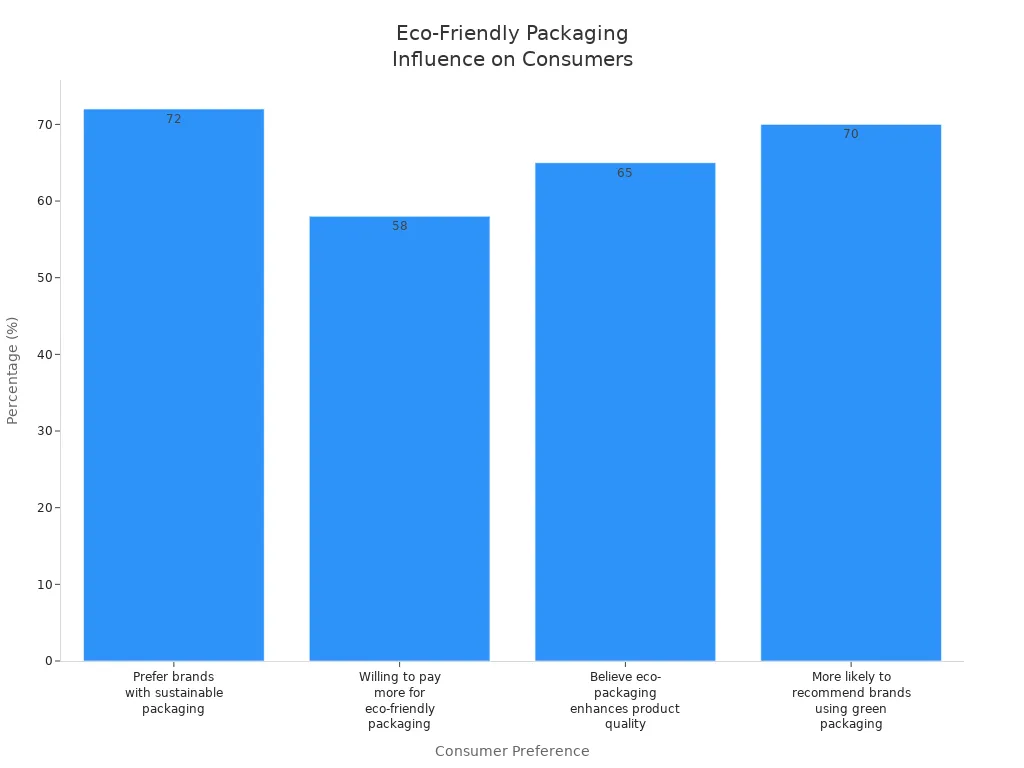
On constate que la plupart des consommateurs estiment qu'un emballage écologique améliore la qualité du produit et sont prêts à payer plus cher pour cela. Les flacons à pompe rechargeables contribuent également à accroître la satisfaction client et le panier moyen. En choisissant un emballage à pompe durable, vous témoignez de votre engagement environnemental et attirez une clientèle soucieuse de l'environnement.
Conseil: Utilisez des flacons à pompe rechargeables pour créer un sentiment d'investissement et un lien émotionnel avec vos clients.
Vous pouvez différencier votre produit en choisissant des matériaux et des conceptions de pompes qui reflètent les valeurs de votre marque et répondent aux attentes des consommateurs en matière de durabilité.
Vous pouvez choisir les flacons-pompes adaptés à votre produit et à votre marque en examinant chaque détail de l'emballage. Le tableau ci-dessous présente les étapes clés recommandées par les experts pour choisir la pompe, l'actionneur, le système de fermeture, le diamètre du col, le dosage, la longueur du tube et la couleur les mieux adaptés à votre produit :
Facteur clé | Description |
|---|---|
Type de pompe | Choisissez entre les pompes à clip, à vis ou à interrupteur pour plus de sécurité et de facilité d'utilisation. |
Type d'actionneur | Adapter le style de l'actionneur à l'esthétique du produit et à l'image de marque. |
Type de fermeture | Choisissez des fermetures lisses, nervurées ou métalliques pour des avantages visuels et fonctionnels. |
Tour de cou | Assurez-vous que le diamètre du goulot corresponde à celui de la bouteille et pompez-la correctement. |
Dose de la pompe | Ajuster la dose en fonction des spécifications du produit et de son utilisation. |
Longueur du tube | Adaptez la longueur du tube à la taille de la bouteille et à la viscosité du produit. |
Couleur | Utilisez des couleurs personnalisées pour renforcer l'identité de marque et l'attrait du produit. |
Le choix judicieux de votre pompe et de votre emballage améliore l'ergonomie du produit et la satisfaction client. Vous pouvez adapter le débit de la pompe à la densité de la formule, tester régulièrement l'emballage et utiliser la pompe la plus adaptée pour instaurer un climat de confiance et fidéliser votre clientèle. En cas de besoin, n'hésitez pas à consulter des experts en emballage pour garantir que votre produit se démarque et offre une expérience optimale.
Une pompe à lotion permet de distribuer des produits plus épais comme les crèmes ou les lotions. Une pompe classique est généralement plus adaptée aux liquides tels que le savon ou le shampoing. Pour un résultat optimal, il est conseillé d'utiliser une pompe adaptée à la viscosité du produit.
Pour éviter tout colmatage, nettoyez régulièrement la pompe et conservez votre produit dans un endroit frais et sec. Si vous utilisez des formules épaisses, choisissez une pompe adaptée aux viscosités élevées. Testez toujours la pompe avec votre produit.
Oui, vous pouvez réutiliser un flacon-pompe de lotion si vous le nettoyez soigneusement. Enlevez tout résidu de produit de la pompe et du flacon. Réutiliser les flacons est un geste écologique qui contribue à réduire les déchets.
Vérifiez le dosage recommandé pour votre produit. Par exemple, les crèmes nécessitent souvent une pompe délivrant 1 à 2 ml par utilisation. Testez la pompe avec votre formule pour vous assurer qu'elle délivre la quantité adéquate.

 Lisson Mansion , No.2-36 Yongfa Road, Huadu District,Guangzhou CHINA
 +8615099958531
 lissontube@gzlisson.com