QU'EST-CE QUE TU CHERCHES?

Vitamin C is widely used in skincare products such as brightening serums, antioxidant treatments, facial lotions, and daily moisturizers. However, packaging selection can be challenging because some vitamin C formulations are sensitive to oxygen, light, temperature, and repeated exposure during use. For skincare brands, choosing the right bottle is not simply a matter of appearance. The packaging must work with the formula, provide suitable protection, and deliver a consistent user experience.
When selecting Lisson cosmetic packaging solutions for vitamin C products, buyers should evaluate bottle material, light protection, dispensing structure, formula compatibility, and production requirements together. An airless cosmetic bottle may be suitable for a sensitive serum, while a barrier-layer plastic bottle or a carefully tested dropper bottle may work better for other formulations.
This guide explains the key factors cosmetic brands and packaging buyers should consider before choosing bottles for vitamin C skincare formulations.
Vitamin C is not a single ingredient with identical stability characteristics. L-ascorbic acid, for example, is sensitive to oxidation and can degrade when exposed to oxygen, light, and unsuitable storage conditions. Different vitamin C derivatives may have different stability profiles, so packaging requirements should be based on the actual formulation rather than the ingredient name alone.
For brands developing vitamin C serums or antioxidant skincare products, three packaging-related risks deserve particular attention:
Packaging cannot correct an unstable formula or replace proper preservation and storage practices. Its role is to reduce avoidable exposure and help maintain the intended product quality throughout its stated shelf life.
Light protection is one of the first considerations when selecting a bottle for vitamin C skincare. Transparent packaging can create an attractive display, but it may not provide sufficient protection for formulations that are sensitive to visible or ultraviolet light.
An opaque cosmetic bottle limits light transmission by using an opaque material, color, coating, or multilayer construction. Depending on the material and design, it can help reduce the amount of light reaching the formula.
When evaluating an opaque bottle, buyers should consider:
Dark-colored packaging is not automatically UV-proof. A bottle's actual protection depends on its resin, pigments, wall thickness, structure, and manufacturing quality. Brands should request relevant material or light-transmission data when light protection is a critical specification.
Material selection influences the appearance, durability, compatibility, and protective performance of cosmetic packaging. For vitamin C products, buyers should consider more than whether a bottle is made from PE, PET, PETG, or PP. The complete packaging structure and its interaction with the formula are equally important.
| Material / Structure | Potential Advantages | What Buyers Should Check |
|---|---|---|
| HDPE | Durable, lightweight, and suitable for various cosmetic bottle designs. | Formula compatibility, wall structure, opacity, and dispensing performance. |
| PET / PETG | Good design flexibility and a range of transparent, tinted, or decorative finishes. | Light transmission, chemical compatibility, and suitability for the specific formula. |
| PP | Useful for caps, closures, and selected cosmetic packaging structures. | Seal integrity, component compatibility, and the complete package design. |
| Multilayer / EVOH barrier structure | Can improve resistance to oxygen transmission when properly designed. | Barrier performance, layer construction, and compatibility with the filling formula. |
For formulas where oxygen transmission is a concern, a multilayer structure incorporating EVOH may be worth evaluating. EVOH is commonly used as a gas-barrier layer, but it should not be treated as a substitute for UV protection. Oxygen barrier performance and light protection are two separate packaging requirements.
For example, Lisson offers a 30ml 50ml EVOH HDPE bottle with an HDPE body and PP cap. This structure can be considered for brands evaluating barrier-oriented plastic packaging. Its suitability for a specific vitamin C formula should still be confirmed through compatibility and performance testing.
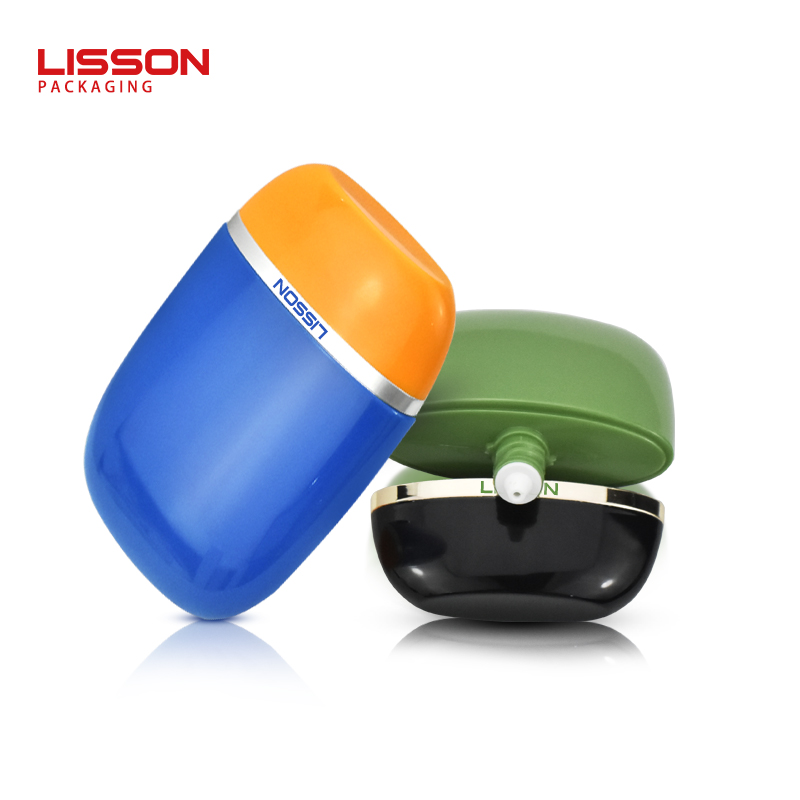
EVOH layer HDPE bottle for cosmetic and skincare packaging
For oxidation-sensitive vitamin C serums, the dispensing system can be just as important as the bottle material. Traditional open-neck containers and some dropper formats expose the formula to air each time the product is opened. An airless system offers a different approach.
An airless bottle generally uses a piston or another vacuum-based mechanism to move the product toward the dispensing outlet as the user operates the pump. This design helps reduce repeated contact between the bulk formula and outside air. It can also limit direct finger contact and support controlled dispensing.
When sourcing an oxidation-resistant bottle, buyers should evaluate the entire package rather than relying on the airless label alone. Important details include:
For brands looking for this type of packaging, Lisson's airless bottle collection includes plastic packaging options for skincare applications.
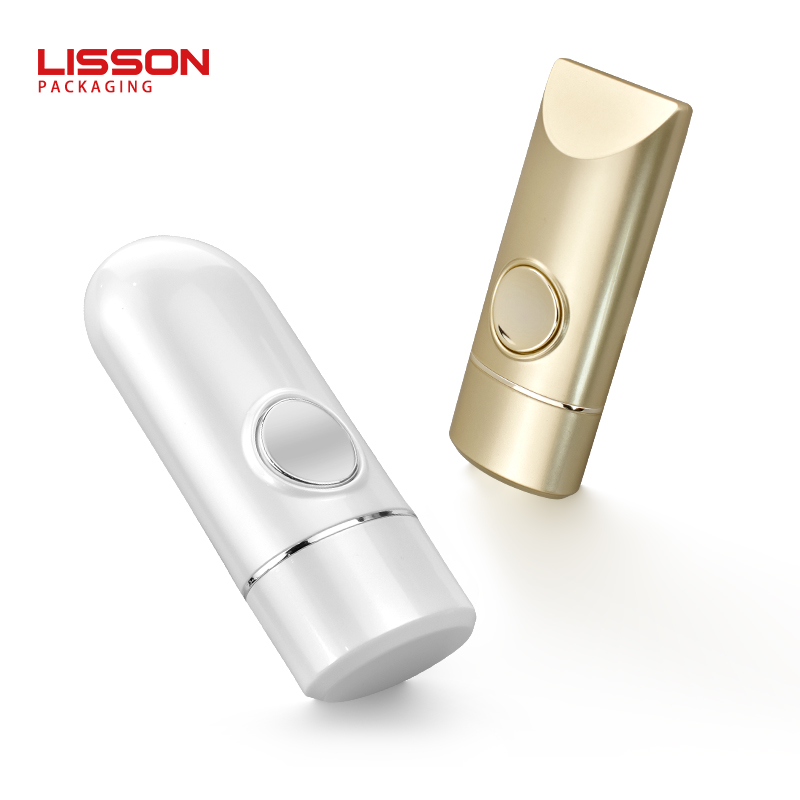
30ml and 50ml plastic cosmetic airless bottle
The 30ml 50ml airless bottle is listed with PET, PP, and PE materials, customizable logo and color options, and an airless dispensing design. It can be evaluated for suitable skincare formulations after testing the actual formula and package combination.
Airless and dropper bottles serve different dispensing needs. The right choice depends on the formulation, product positioning, dosage expectations, and packaging performance requirements.
| Selection Factor | Airless Bottle | Dropper Bottle |
|---|---|---|
| Dispensing | Pump-controlled dosage. | Manual liquid dispensing. |
| Air exposure | Designed to reduce repeated air contact with the bulk product. | Product is exposed when the bottle is opened. |
| User experience | Convenient for daily serum and lotion use. | Suitable for controlled application of liquid serums. |
| Key checks | Pump compatibility, sealing, priming, and residual product. | Pipette compatibility, closure sealing, and dispensing accuracy. |
Dropper packaging can still be suitable for certain vitamin C products, particularly when the formula and usage design support this format. However, opening the bottle for each application may increase exposure to air. Brands should assess whether that exposure is acceptable for the formula's stability requirements.
For a premium serum concept, Lisson's dropper bottle range offers another packaging direction. Its 15ml 30ml 50ml PETG dropper bottles are available in multiple capacities and can be customized with logo, color, and printing options.
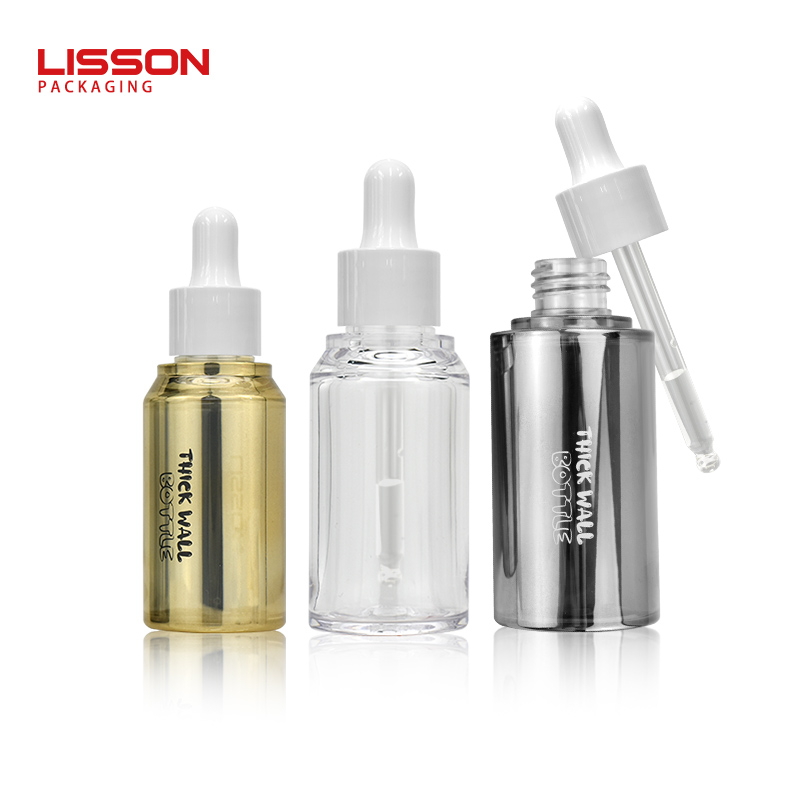
15ml, 30ml and 50ml PETG dropper bottle options
Even a well-designed bottle may not be suitable for every vitamin C formulation. The formula can contain acids, solvents, oils, fragrances, preservatives, and other active ingredients that interact differently with packaging materials.
Before placing a bulk order, cosmetic brands should conduct compatibility testing using the actual production formula and the complete packaging assembly. This should include the bottle body, inner components, pump or dropper, gasket, and closure.
A practical evaluation process can include:
Testing should follow the brand's formulation and quality requirements. A short visual check alone cannot establish long-term shelf life or prove that a bottle prevents oxidation.
For skincare brands purchasing cosmetic bottles in bulk, packaging performance must be balanced with branding, production feasibility, and order planning. A suitable bottle should be technically appropriate while also matching the product's market positioning.
When discussing a custom vitamin C bottle project with a manufacturer, buyers should prepare the following information:
These details help the packaging supplier assess the project more accurately and recommend suitable structures before mass production. Brands should also confirm the minimum order quantity, sample availability, tooling requirements, and production lead time for the selected design.
As a cosmetic packaging manufacturer, Lisson Packaging provides plastic bottles, airless bottles, acrylic bottles, dropper bottles, and cosmetic jars for global beauty and skincare brands. Its customization services include bottle color, logo printing, surface finishes, and packaging design development.
Before finalizing a packaging specification, buyers can use this checklist to compare different bottle options:
There is no universal bottle that works best for every vitamin C skincare product. An opaque airless bottle may be a strong candidate for a sensitive serum, while a barrier-layer HDPE bottle or a tested dropper design may suit other product concepts. The final decision should be supported by formulation data, packaging tests, and the intended consumer experience.
An airless bottle with suitable light protection is often a practical option for sensitive vitamin C serums. It can reduce repeated air exposure and support controlled dispensing. The final choice depends on the vitamin C form, formula stability, and packaging compatibility test results.
Opaque bottles reduce the amount of light reaching the formula. This can be useful for light-sensitive vitamin C formulations. However, opacity alone does not guarantee complete UV protection. Brands should request relevant light-transmission data when specific protection levels are required.
Yes, selected plastic bottles can be suitable for vitamin C skincare products. HDPE, PET, PETG, and multilayer structures may be evaluated according to the formula and packaging requirements. Compatibility and stability testing should be completed before mass production.
An airless bottle generally reduces repeated exposure of the bulk formula to outside air during dispensing. A dropper bottle offers controlled liquid application but requires opening the container each time. For oxidation-sensitive formulas, airless packaging is often worth evaluating first.
EVOH is used as an oxygen-barrier material and can help reduce oxygen transmission in a properly designed multilayer package. Its actual performance depends on the complete bottle structure and manufacturing quality. It does not automatically provide UV protection, so light protection should be evaluated separately.
Buyers should provide the formula type, viscosity, pH range, target capacity, preferred material, dispensing system, light protection requirements, order quantity, and decoration specifications. Sharing this information helps the manufacturer recommend suitable packaging and prepare samples for evaluation.
Choosing packaging for vitamin C products requires a balance of formula compatibility, light protection, oxygen management, and dispensing performance. The right bottle should be selected through a clear specification process and tested with the actual formulation before bulk production.
Lisson Packaging supports skincare brands with custom plastic bottles, airless packaging, dropper bottles, and OEM/ODM cosmetic packaging solutions. Contact the team to discuss your formula requirements, bottle design, material options, and wholesale order needs.

 Lisson Mansion , No.2-36 Yongfa Road, Huadu District,Guangzhou CHINA
 +8615099958531
 lissontube@gzlisson.com